Bed bug infestations require immediate domestic relief grounded in insect biology rather than generalized chemical spraying. In suburban Blacklick residential architecture, ranging from the newer builds in Jefferson…
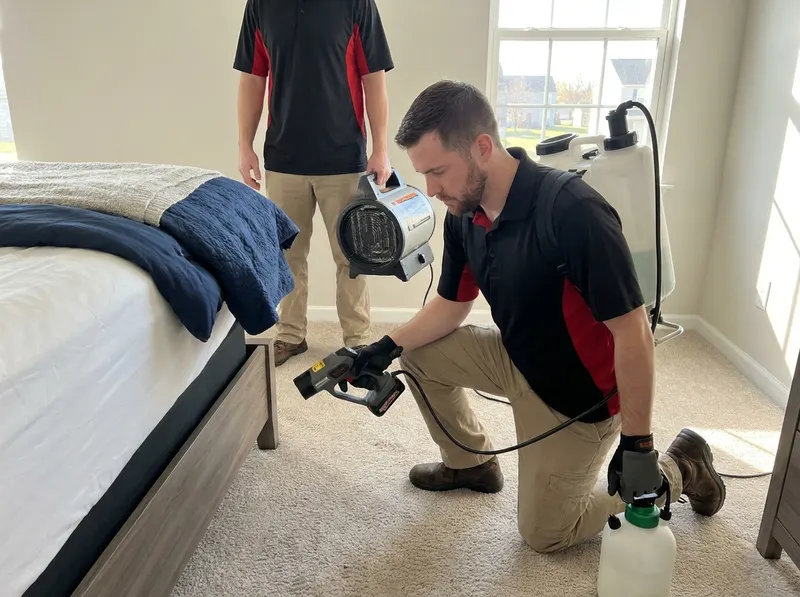
Bed bug infestations require immediate domestic relief grounded in insect biology rather than generalized chemical spraying. In suburban Blacklick residential architecture, ranging from the newer builds in Jefferson Run and Farms at Jefferson to established split-levels along Havens Corners and Broadview Heights, bed bugs exploit baseboard seams, hollow-core doors, and carpet tack strips. Convection heating systems direct forced dry air into living spaces until the core temperature of furniture, framing, and interior voids reaches a lethal thermal point. Research documented by the U.S. Environmental Protection Agency confirms that exposure to temperatures above 118°F causes complete thermal mortality across all bed bug life cycles within 90 minutes. Thermal systems bypass the behavioral resistance modern bed bugs exhibit toward standard over-the-counter pyrethroids, penetrating wall voids and mattress seams that liquid sprays often miss.
Precision spot applications complement thermal mechanics to establish an invisible structural defense. While heat eradicates active harborages, non-repellent residual insecticides and desiccant dusts applied along perimeter baseboards, switch plates, and plumbing penetrations prevent re-infestation. According to standards established by the Pest Control Technology trade network, utilizing insect growth regulators alongside structural desiccants like amorphous silica gel disrupts the molting stages of any newly introduced nymphs. Formulations comply with safety guidelines outlined by the Centers for Disease Control and Prevention and the Ohio Department of Agriculture, prioritizing low-toxicity perimeter barriers safe for households with children and pets once dry. Homes near high-traffic green spaces such as Blacklick Woods Metro Park and the Blacklick Creek Greenway Trail benefit from sealed baseboards and perimeter thresholds that prevent migrating insects from finding harborages between multi-story drywall partitions.
Property owners in neighborhoods like Sable Ridge, Woods at Jefferson, and Blacklick Ridge often face the decision between localized precision applications and whole-structure heat remediation. A single-room precision application fits isolated introductions detected within 7 to 14 days of travel or guest stays, minimizing disruption and preparation time. However, multi-room thermal treatment becomes necessary when bed bugs spread across shared ductwork or adjacent wall cavities. The trade-off centers on upfront preparation versus treatment duration: thermal remediation demands removing temperature-sensitive items such as wax, aerosol cans, and electronics, but resolves severe infestations in a single day, whereas chemical-only plans often require 2 to 3 follow-up visits spaced 14 days apart to address newly hatched eggs. Professional execution follows guidance from the National Pest Management Association, ensuring temperature sensors monitored continuously via wireless probes prevent structural damage while validating eradication.
Every job gets a firm, written price after an on-site visit.
Tell us about your bed bug thermal & precision treatments job in Blacklick and we'll send a clear, written quote, usually the same day.
 ZephyrCrest Insect Protection