Filth and drain fly infestations inside Blacklick residences stem from active oviposition inside gelatinous organic films. The life cycle of Psychodidae (drain flies) requires decaying matter, where females deposit 30…
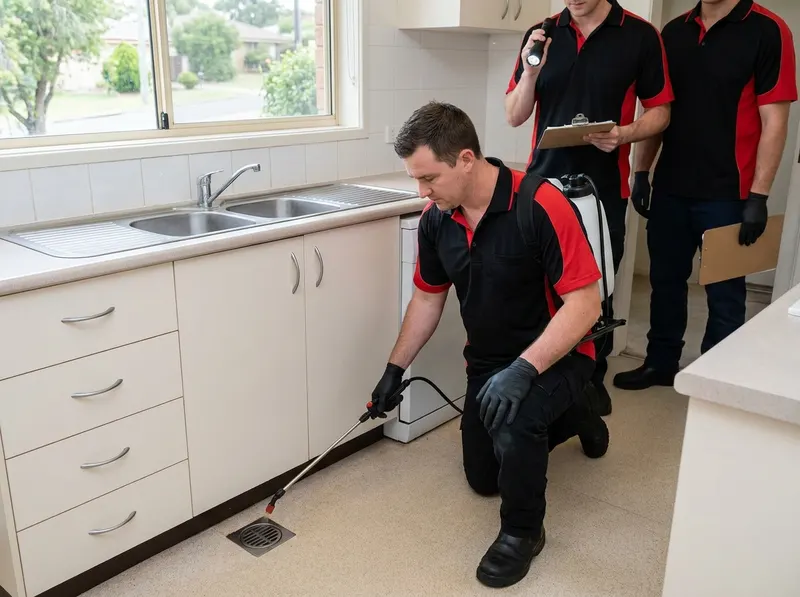
Filth and drain fly infestations inside Blacklick residences stem from active oviposition inside gelatinous organic films. The life cycle of Psychodidae (drain flies) requires decaying matter, where females deposit 30 to 100 eggs at a time, maturing from larvae to winged adults in 7 to 28 days depending on water temperature. Poured-concrete basements and secondary sump basins commonly found in Woods at Jefferson, Sable Ridge, and Broadview Heights often experience subterranean moisture pooling that supports chronic breeding. Standard liquid bleach or hot water flushes temporarily knock down surface larvae but fail to dissolve the lipid-rich sludge lining cast iron and PVC pipes, allowing pupae to emerge uninterrupted. Effective remediation relies on specialized microbial foams containing active enzymes that digest grease, hair, and cellulose, removing the food source required for larval survival according to guidelines established by the Environmental Protection Agency.
Selecting professional bio-enzymatic breakdown over chemical insecticide fogging prevents the release of volatile synthetic compounds into indoor living spaces while providing superior residual eradication. Surface aerosol sprays merely kill adult flies on the wing, leaving subterranean breeding sites untouched. In properties near Blacklick Creek Greenway Trail and Jefferson Run, perched water tables can drive localized moisture into basement floor joints and foundation French drains, creating secondary harborage for phorid flies (Phoridae). Phorid larvae thrive on moist decay and can even penetrate sub-slab soil fissures if an unmapped drain line cracks. Confirming structural line integrity via pressure diagnostics or smoke testing separates simple trap contamination from below-slab sewer breaks, aligning with plumbing hygiene standards published by the International Association of Plumbing and Mechanical Officials.
Executing complete larval eradication follows a distinct sequential protocol:
Preventative drain hygiene involves regular maintenance of structural moisture barriers and biological integrity. In areas like Farms at Jefferson and Blacklick Ridge, home systems connected to municipal sewers or private aeration systems require balanced bacterial activity to prevent line stagnation. The Centers for Disease Control and Prevention notes that while drain flies do not bite, their physical emergence from sewer biofilms enables the passive mechanical transmission of environmental bacteria onto food contact surfaces. Integrating seasonal perimeter defense, pipe clearing, and waste line monitoring ensures plumbing networks remain biologically uninhabitable for nuisance flies without introducing harsh, pipe-corroding caustics. Structural protection requires strict avoidance of harsh acid products that destroy plumbing seals, an issue detailed by the Plumbing Foundation, favoring instead neutral non-pathogenic bacterial consortia verified by the ASTM International materials standards. In addition, moisture remediation around foundation footings should reflect guidance from the U.S. Department of Housing and Urban Development, while pest exclusion practices align with technical bulletins from the Entomological Society of America, the professional directives of the National Pest Management Association, and agricultural extension findings supported by the United States Department of Agriculture.
Every job gets a firm, written price after an on-site visit.
Tell us about your filth & drain fly remediation job in Blacklick and we'll send a clear, written quote, usually the same day.
 ZephyrCrest Insect Protection